
How to train defense when you don't have a sparring partner
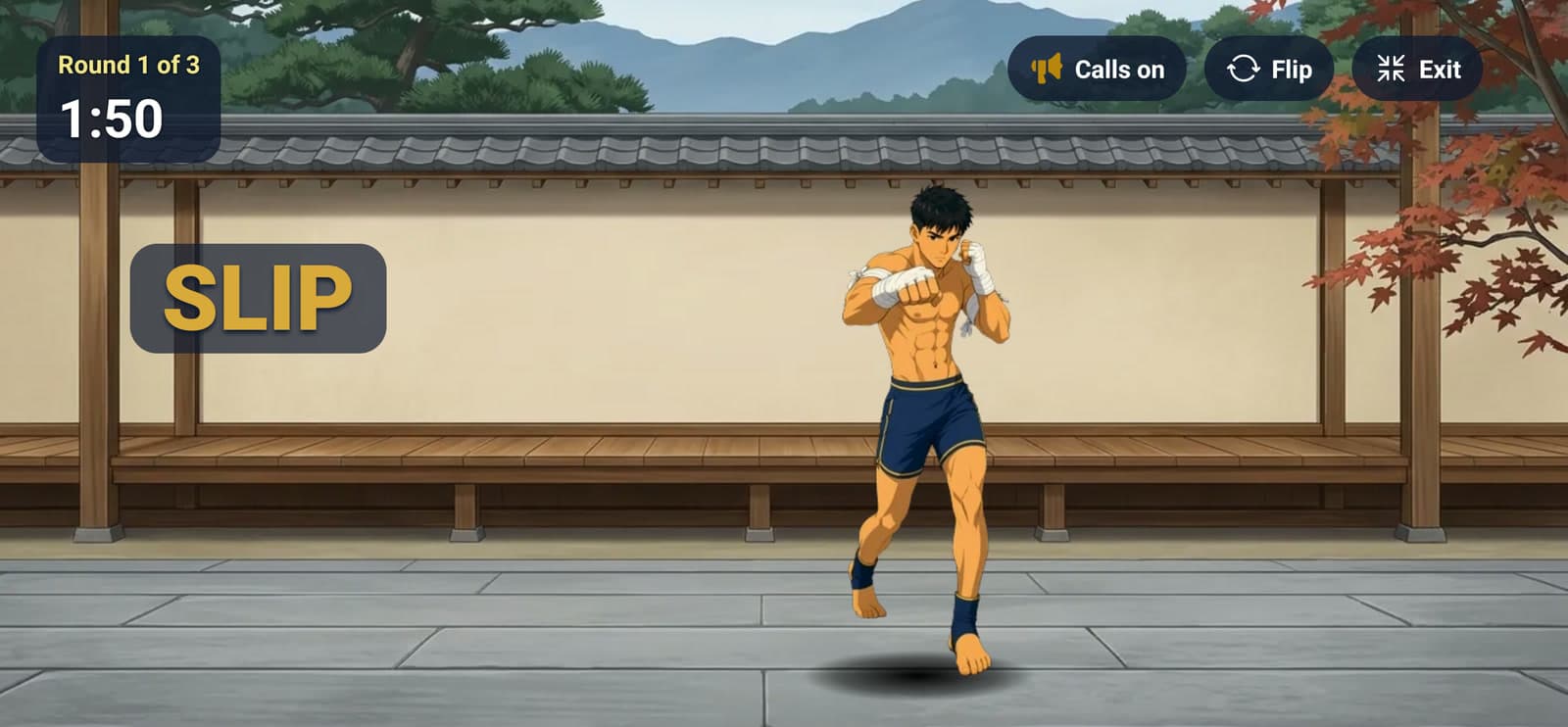
Most people's shadow boxing is all offense. The heavy bag never hits back. So people who train boxing or Muay Thai on their own get good at throwing and stay bad at not getting hit, and they find out the first time someone throws back. In twenty years of Muay Thai, I've watched that first spar humble a lot of good bag hitters.
Short answer: learn each defensive move as a shape first, then train it as a reaction to a call you don't see coming, and finish every defense with a strike of your own. A defense you only do on your own schedule is choreography. A defense you do when someone (or something) tells you, at a moment you didn't pick, is the start of a reflex.
Everything below assumes an orthodox stance (left foot and left hand in front). If you're a southpaw, flip left and right. If you only box, you need the punch defenses; kicks, knees and teeps (a straight push kick with the ball of the foot) belong to Muay Thai and kickboxing.
The base: what every defense starts from
Hands home. Gloves at your cheekbones, elbows in front of your ribs. Most defenses are small because your guard already does half the work.
Chin down, eyes up. Watch the chest and shoulders, not the hands. The shoulders move before the punch does.
Knees soft. Almost every defense starts in the legs. Locked knees turn a slip into a lean from the waist, which is slower and pulls you off balance.
The defensive calls, and what each one should look like
Against straight punches and hooks
SLIP: for a jab or a cross (the straight punches from the front and back hand). Move your head just outside the punch's line by turning your shoulders and bending your knees slightly. A few inches, no more: just enough that the punch passes beside your ear. Against an orthodox jab, slip to your right; against the cross, slip to your left. Both gloves stay up.
PARRY: for a straight punch, a teep or a kick to the body. Knock it off its line with a small slap of the glove. Against a jab, your rear glove taps it across and comes straight back to your face. Against a teep or a body kick, sweep it past your hip with an open glove and turn slightly off the line.
ROLL: for a hook or an overhand (a looping punch over the top). Bend your knees and drop under the punch in a small U shape, coming up on the other side of it, back in your stance. The legs do the work. Fold at the waist and your head ends up in front of your knees, right where an uppercut or a knee is going.
DUCK: for a hook, a straight punch or a spinning strike. Drop straight down by bending your knees, eyes still forward, then come straight back up. It's the quickest way under a strike, and the most predictable if you do it every time. In Muay Thai, keep it short and rare: down low is where knees come up.
LEAN BACK: for a straight punch, an uppercut (a punch rising under your chin) or a high kick. Shift your weight onto your back foot and let your head travel back a few inches, chin still down. It works only when your feet are set, and only by a little. Lean too far and you're off balance with nothing to counter from.
Covering up
HIGH GUARD: for a punch, kick or elbow to the head. Both gloves tight to your forehead and temples, elbows in, forearms covering the sides of your face. Don't reach out to meet the strike, and don't look away from it. Let it land on the gloves and forearms, then get out or throw back. Against a head kick, raise the arm on the kicked side, glove behind your ear and elbow pointing forward, so the shin lands on your forearm and shoulder, not your glove.
BLOCK: for an uppercut or a kick to the body. Your forearm becomes the shield. Against an uppercut, bring the glove and forearm down in front of your chin. Against a kick to the body, bring your elbow tight to your ribs, forearm upright and glove still by your jaw, and take it on the forearm and elbow with a small crunch toward it.
BLOCK LOW: for a punch or a knee to the body. Drop your elbow onto your ribs on the side being hit and crunch slightly toward it. The elbow covers; the hand stays near your face.
Against kicks, knees and teeps
CHECK: for a low kick or a kick to the body. Lift your leg on the side being kicked, knee turned out, so the kick lands on your shin instead of your thigh. Bring that knee up toward your elbow to close the gap, then put the foot straight back down in your stance.
CATCH: for a teep or a kick to the body. Against a body kick, take it on your forearm and elbow first, then scoop that arm under the leg and clamp it to your side, other glove up at your face. Against a teep, cup the heel with your glove as it reaches your stomach. Then strike, sweep, or step back and pull while you hold it. Practice the arm shape alone; catch real kicks only once a coach has shown you, with light kicks first.
STEP BACK: for a teep, a knee or anything you can step out of. Back foot first, then front foot, the same distance, so you land in your stance. Never cross your feet, and never step straight back twice in a row: that's how people end up against the ropes.
Drill 1: shapes in the mirror
Still positions first, the same way you'd learn a strike. Stand in front of a mirror, or prop your phone against the wall and record. Go into each defense slowly, hold it for two seconds, check it against the list above, and come back to your guard.
Watch one thing on every rep: did your hands stay home? A slip with a dropped glove is a slip into the next punch.
Drill 2: the slip line
Tie a rope or a cord across the room at about shoulder height, from the window grill to a door handle. Stand beside it in your stance and walk along it, rolling under it from one side to the other: under, up, step, under, up. It makes your legs, not your back, do the rolling.
For slips, hang a rolled sock or a small ball on a string at nose height, swing it, and slip it as it comes back at you. Two rounds of two minutes of each is plenty.
Drill 3: train to a call you don't control
This is the step people skip, and it's the one that turns a shape into a reaction.
Ask a younger sibling or anyone at home to call out defenses at random while you shadow box: "Slip. Roll. High guard. Check." They don't need to know boxing, just to leave uneven gaps between the words. No one around? Record yourself reading a random list with pauses of different lengths, and play it back a few days later, once you've forgotten the order.
Forget speed for now. You want the right shape to come out before you've decided which one.
Drill 4: every defense ends with a strike
A defense that ends in nothing is half a move. Once the shapes come on call, pair each one with a return:
Slip outside the jab, then throw your cross.
Parry the jab, then jab straight back over it.
Roll under the hook, then hook back from the side you came up on.
High guard, then throw from the hand that took the shot.
Check the kick, then put the foot down and kick straight back.
Catch the kick, then throw a cross while you hold it.
Step back, then jab as they step in after you.
When you hear "slip", the drill is now "slip, cross".
The mistakes almost everyone makes
Closing your eyes. Natural, and the first habit to break. You can't counter what you didn't see.
Reaching with the parry. Small slap, hand straight home.
Checking with the knee pointing forward. If it doesn't turn out, the kick lands on your thigh anyway.
Same defense every time. If you always duck, the next strike comes in low.
None of this replaces real sparring
Drills build the shapes and the timing. They don't teach you what it feels like when someone is actually trying to hit you, and nothing at home can. When you're ready, start with light technical sparring under a coach, with a mouth guard, proper gloves and shin guards if you kick, at a speed where both people can think. The drills above make those first rounds a lot less of a shock.
If you want a coach to make the calls
I built an app called EnsayoHub. It plans and coaches your weights, circuits, runs and martial arts. Its boxing, kickboxing and Muay Thai plans now have a Virtual Sparring round, where your coach in the app, Fury or Katana, throws strikes at you for the whole round. With calls on, the coach calls the defense out loud as each strike comes and puts it on screen in big letters, the same calls as in this article, and a gold JAB, CROSS or TEEP means it's your turn to throw. Every round is new. It starts at your plan's level, and the round's card lets you change the level and the speed. It doesn't watch you or score you: it's Drill 3 with a coach on screen throwing the strikes, for the days between real sessions. Free to start, and Virtual Sparring is in the free version too.
To start one: open your martial arts plan, start its Virtual Sparring round, pick Fury or Katana, and turn your phone sideways for full screen. Calls are on at Beginner; at the other levels, tap Calls on while you learn.
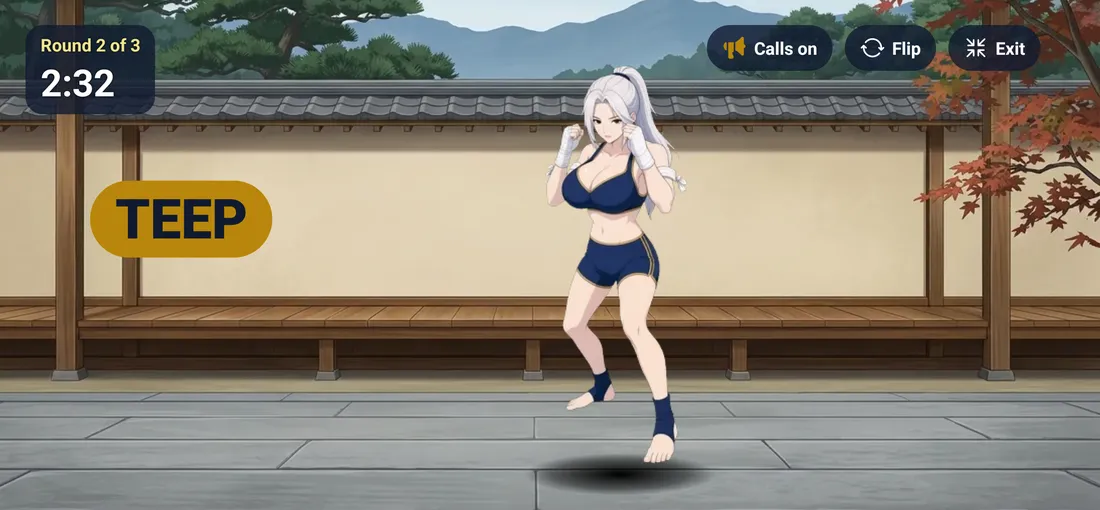
From a test account: Katana in the temple courtyard. The gold TEEP means it's your turn to throw.
Download: https://ensayohub.com/#download