
When should you add weight? A beginner's guide to going heavier without guessing
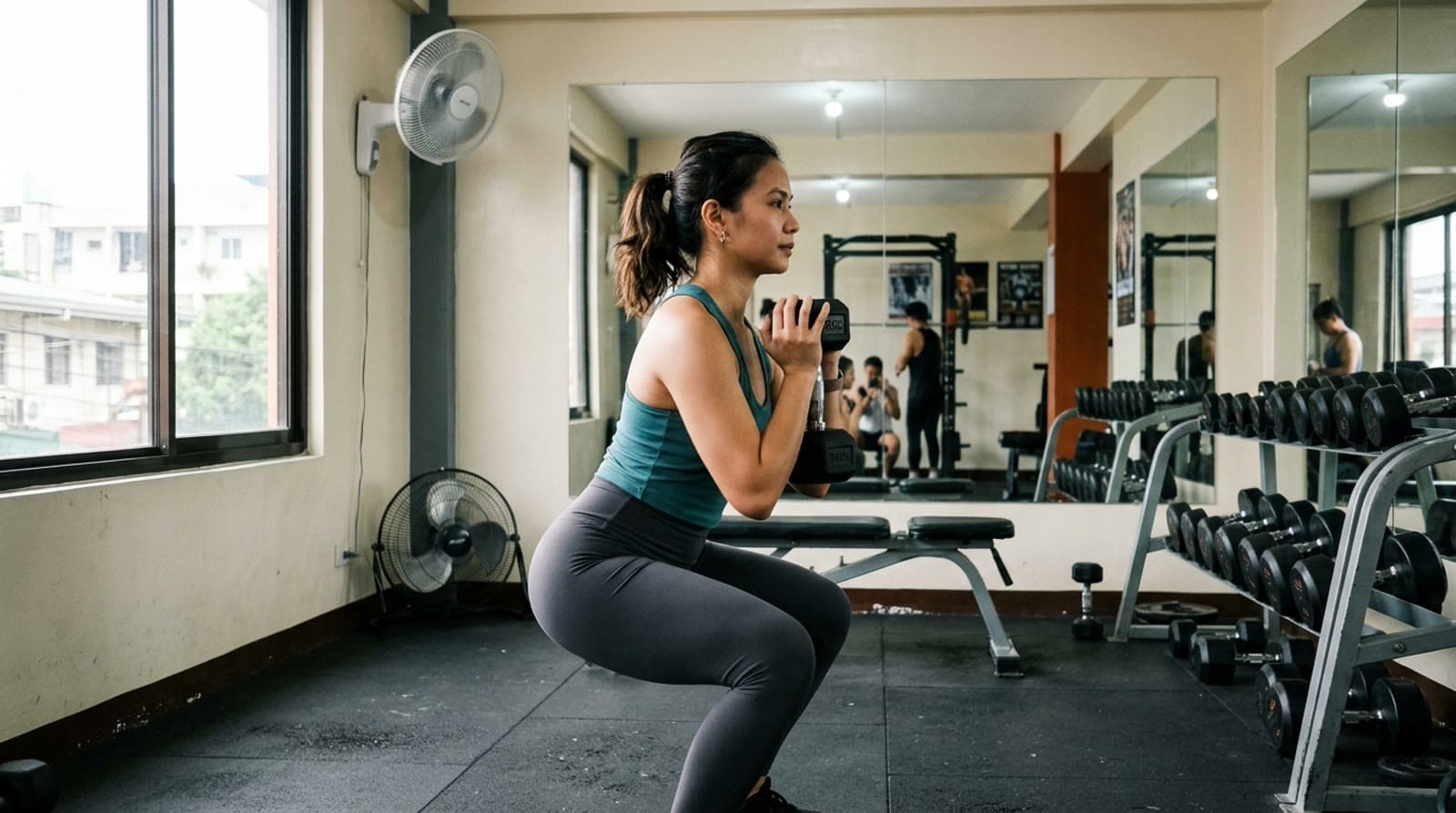
A question that shows up in gym groups every week: "I've been using the same 5 kg dumbbells for two months. Should I go heavier?"
Short answer: use a rep range, and let it decide for you. Pick a range, like 8 to 12 reps. Stay at the same weight until you can do the top of the range on every set with clean form. Then add the smallest jump your gym allows and start again at the bottom of the range. This method is called double progression, and it's the simplest way to keep getting stronger without guessing.
Here's how it works, with real numbers.
Why adding weight every week stops working
Your muscles adapt to what you ask of them. If the work never gets harder, your body has no reason to change. That's progressive overload: doing a little more over time.
But "a little more" doesn't have to mean more weight every session. Adding 2.5 kg a week can work for a few months on a barbell squat. Keep it up for a year, though, and you'd be squatting an extra 130 kg. Nobody progresses like that forever. And on light dumbbells, 2.5 kg is a 25 to 50% jump from day one.
The fix is to have two ways to progress: reps first, then weight.
Double progression, step by step
Take a beginner doing goblet squats (holding one dumbbell at your chest and squatting) for 3 sets, aiming for 8 to 12 reps, with a 5 kg dumbbell.
Session 1, 5 kg: 10, 9, 8 reps. Same weight, aim for one more rep.
Session 2, 5 kg: 11, 10, 9. Same weight.
Session 3, 5 kg: 12, 11, 10. Same weight.
Session 4, 5 kg: 12, 12, 12. Top of the range on every set: go heavier.
Session 5, 6 kg: 9, 8, 8. Back at the bottom of the range. Climb again.
Notice what happens at session 5. The weight goes up and the reps go down. This is supposed to happen. You moved up a rung, so the climb starts over.
Two rules make this work:
Every set at the top of the range, not just the first one. 12, 12, 9 isn't ready. 12, 12, 12 is.
Clean form on every rep. If you have to swing, bounce or cut the depth short to hit 12, you're not there yet.
Some lifters wait until they hit the top of the range in two sessions in a row before moving up. That's a good habit if you're not sure whether the last session was a fluke.
How much weight to add
Add the smallest jump you can.
Dumbbells up to 20 kg: 1 kg if your gym has it. Going from 5 kg to 6 kg is a 20% jump, which is why you restart at the bottom of the range.
Barbells and heavier dumbbells: 2.5 kg, so a 1.25 kg plate on each side of a barbell. If the smallest plate your gym has is 2.5 kg, your jump is 5 kg, so lean on the rep range.
Machines: one pin down the stack.
Most condo and neighborhood gyms skip sizes and jump from 5 kg straight to 7.5 kg. If yours does, the rep range absorbs it. You might only get 6 or 7 reps with the new weight at first. That's fine. Stay with it and build back up to 8, then climb. If you can't get past 5 or 6 reps after a couple of sessions, go back to the lighter weight, push past 12 to 15 reps, and try the jump again later.
"Won't heavier weights make me bulky?"
This one comes up a lot, especially from women starting out. No, not like this.
Building noticeable size takes years of hard training, a lot of food, and eating to grow on purpose. Adding 1 kg to a goblet squat every few weeks makes you stronger and helps you build some muscle. If you're in a calorie deficit to lose fat, lifting progressively heavier is one of the best ways to keep the muscle you have while the fat comes off. Keeping muscle while the fat comes off is what gives you the toned look.
When to back off
Two situations call for going lighter, on purpose:
You fall below the bottom of your range. If you can't reach 8 reps on a weight you used to handle, and it happens again next session, drop the weight by about 10% (or one step) and build back up. One bad day isn't a trend. Bad sleep, a skipped meal or a stressful week can cost you a rep or two.
You've had a break of 2 weeks or more. The Christmas season, a bout of flu, a crazy month at work. Don't walk back in and lift your old numbers. Start lighter, and you'll usually be back where you were within a few sessions.
Backing off is part of the plan.
A note on low-rep strength training
If your goal is pure strength (lifting the heaviest weight you can for 3 to 6 reps), the logic flips a little. The rep target stays fixed and the weight moves more often, in slightly bigger steps. It's a different program. For most people who want to look better, feel stronger and lose fat, a higher range like 8 to 12 is the better fit.
And if you have a health condition
High blood pressure, an old back injury, pregnancy, recovering from surgery: any of these can change how fast you should progress, or which exercises should get heavier at all. Talk to your doctor before you push the weight up, and progress more slowly than the guide above.
The whole answer, in five lines
Pick a rep range, like 8 to 12.
Same weight until every set hits the top of the range with clean form.
Add the smallest jump available, then restart at the bottom of the range.
Two sessions below the range, or a break of 2 weeks or more: go lighter and build back.
Form first. A rep you have to cheat doesn't count.
If you'd rather not track it yourself
I built an app called EnsayoHub that does this bookkeeping for you. After each session, every lifting exercise in your plan shows one next move: add reps, go heavier, hold, or ease back, based on what you logged. It suggests the smallest standard step (1 kg on dumbbells up to 20 kg, 2.5 kg above that), in kg or lb. If your rack skips sizes, take the next one up and let the rep range absorb it. It moves more slowly if you've told it about a health condition. You can take it or skip it, and it's free on every account.
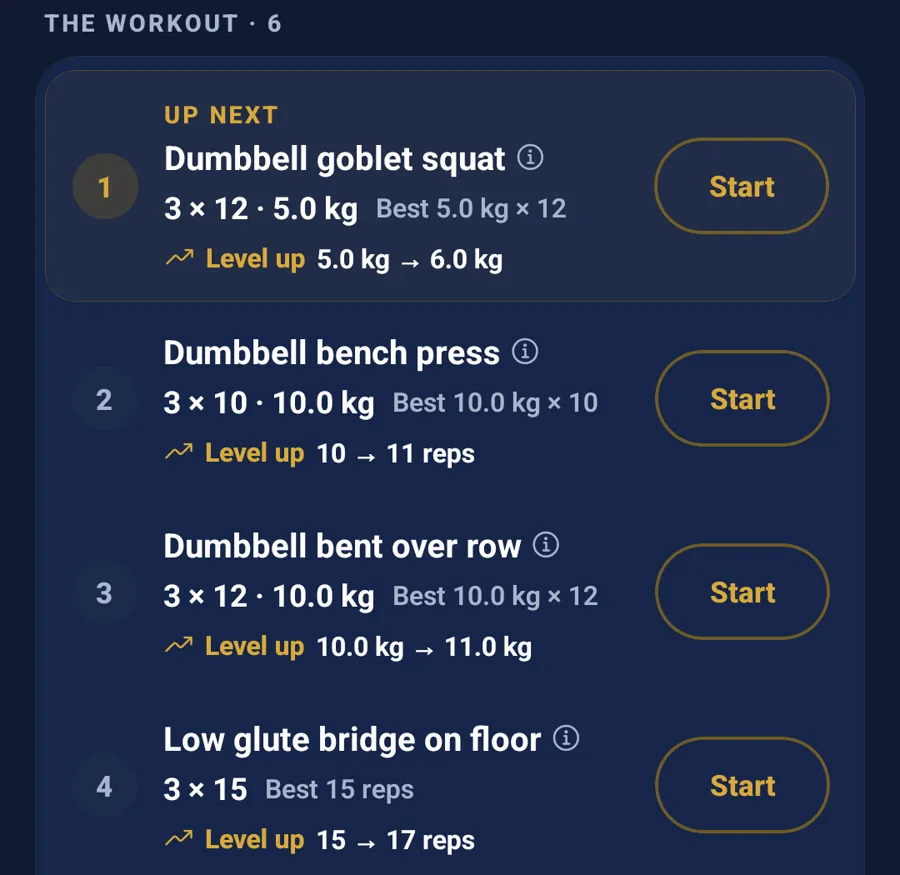
From my test account: the goblet squat and the row are ready for more weight, while the bench press and the glute bridge get more reps first.
Download: https://ensayohub.com/#download
And even without the app: reps first, then weight, smallest jump, restart at the bottom.